
Menu
 1.866.668.5111
  6:30 am - 6:00 pm
 Give a Happy High Five!

February 19, 2026
The Benefits of Sensory Play in Early Childhood
Jennifer Horner, Director of Education Development
As both a parent and an educator, I’ve been gifted countless moments of witnessing the quiet wonder on a child’s face as they immerse their senses in a bin of soapy water, silky dough, or soft feathers. It’s as if their whole world narrows to focus on one tiny experiment at a time. Those magical flashes of exploration—faces lit with curiosity and concentration—is the work of early childhood, and beneath that peaceful scene, their brains are doing remarkable work.
When caregivers are intentional about offering sensory experiences in the early years, they nourish growing minds with exactly the kind of stimulation young brains crave. Read on to learn about all the skills growing during this type of play and ways to offer it in the classroom or at home.
“The connections that form early provide either a strong
or weak foundation for the connections that form later.”
— Harvard Center on the Developing Child
The Brain Science Behind Sensory Play
During the early years of explosive brain growth, as children touch, hear, see, smell, taste and explore, they aren’t just playing — they are:
- Developing fine motor skills through grasping, pouring, scooping, pinching, and using tools.
- Building early science skills as they notice how things move, react to gravity, and interact with other materials.
- Exercising gross motor skills through reaching, crawling, walking, navigating playground equipment, and using toys to throw, kick, pedal, and dance.
- Improving attention and self-regulation by learning to coordinate sensory input with physical control (example: slowing their movements when pouring water).
- Strengthening neural pathways as they grow memory, language, and problem-solving skills.
- Developing social-emotional skills as they learn to navigate their emotions and impulses, manage conflict, and discover their uniqueness and the uniqueness of others.
 Embracing The Mess
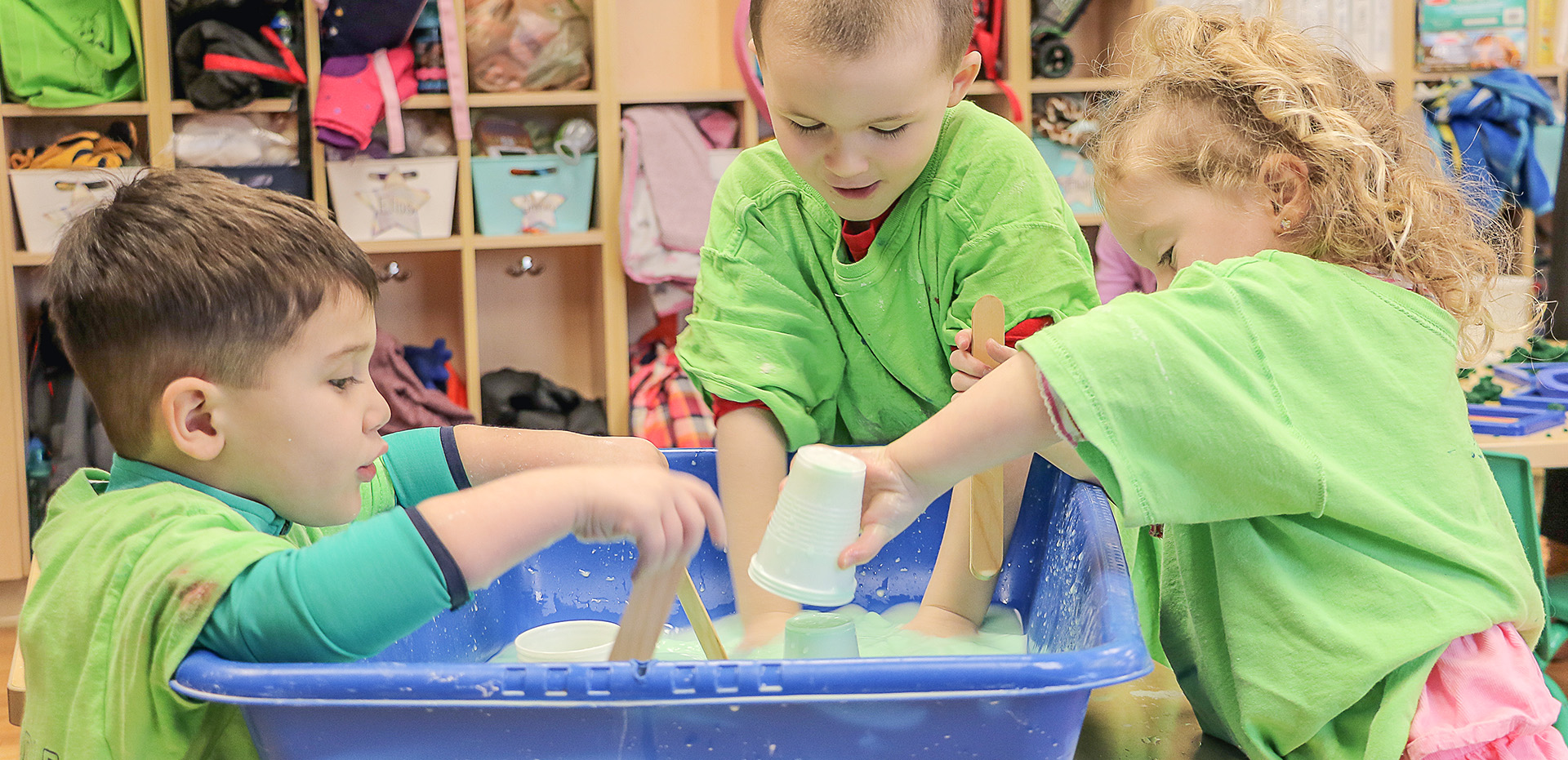
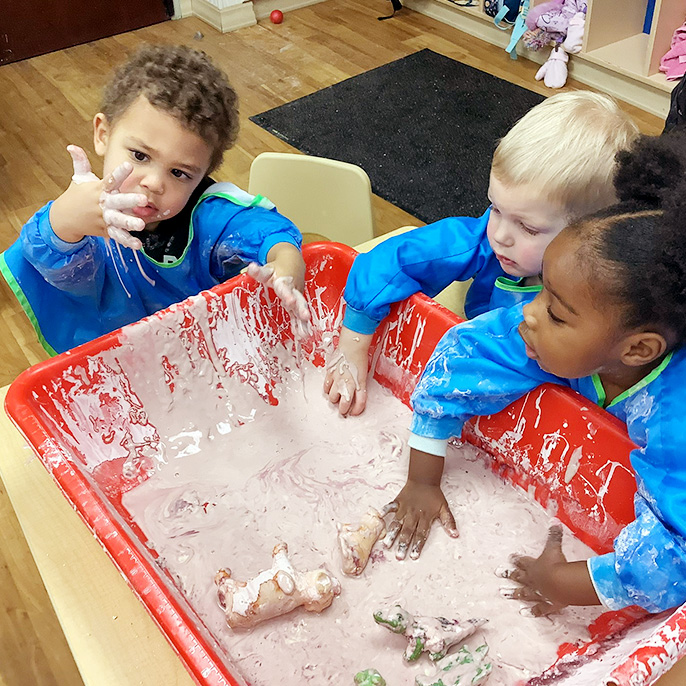
Many adults naturally shy away from the messiness of sensory play, but from an early childhood perspective, mess is a vital component of learning and development. It’s the magic potion that captivates curiosity and activates multiple areas of the brain at once. Every spill, splatter, and scoop represents experimentation in action and a child’s inner scientist at play as they seek to answer questions like:
Does this sound different when I pour water out from up high?
Does the water stick to the cup differently than how it sticks to my hand?
Can my hand hold as much water as the cup?
Why does water pour differently than slime?
Embracing messy experiences allows children to engage more deeply with materials and develop real-world experimentation skills. Through hands-on exploration, children build problem-solving abilities, fine motor control, sensory processing, and early scientific thinking.
Because messy play can feel overwhelming, the simple adjustments listed below can help make these experiences more manageable for adults—while still preserving the magic for children.
- Place a towel, tablecloth, shower curtain or old sheet under activities to catch spills.
- Use shallow bins, baking trays, or storage containers to define the play space.
- Offer smocks or oversized t-shirts to protect clothing.
- Keep a damp cloth nearby for quick cleanups.
- Choose low-stress materials to start— strips of paper, feathers or pom poms that are easy to sweep up.
- For stickier activities like paint or slime, start small—with a single color or limited amount to prevent overwhelm.
- Set and repeat clear boundaries (“The pom poms stay in the bin”) to give children structure while still allowing freedom to explore.
- Most importantly, messy play doesn’t require elaborate setups. A bowl of water, a cup, and a spoon can offer just as much learning as a Pinterest-worthy sensory table. By reframing your mindset to think of mess as meaningful learning, you create room for curiosity, creativity, and joyful discovery without added stress.
 Safe Sensory Play
Before introducing any sensory experience, safety should always come first. Thoughtful preparation helps ensure children can explore freely while minimizing risk.
- Materials should be age-appropriate, meaning they match what children can safely handle and understand at their stage of development—big enough to avoid choking, safe to touch or taste if they put things in their mouths, and simple enough for small hands to use successfully.
- Small materials can be enclosed in a clear container for observation instead.
- Use close supervision to ensure overall safety and also to gently redirect materials from being tasted, “The feathers are for touching, not tasting”.
- Regularly scan the play area for small objects or spills that could cause slipping.
- Use gloves when offering cold materials like ice or snow.
- Guide children in handwashing before and after sensory experiences to support hygiene and help prevent the spread of germs.
Each early childhood program—and every family at home—approaches sensory materials differently, especially when including food items. While there are no universal rules, it’s important to be thoughtful about what approach makes the most sense for the children in your care and to implement experiences with intention and structure.
- Be cautious with materials associated with allergies or skin reactions, such as oats and shaving cream.
- Consider avoiding food items that resemble what a child would see at mealtimes. For example, dried rice in a sensory bin looks, feels, and tastes dramatically different than rice on a plate. Things like cooked pasta, applesauce and pudding are familiar and enticing to taste.
- Consider avoiding scents commonly associated with familiar foods, such as vanilla and cinnamon.
When adults approach sensory play with clear boundaries, supervision, and thoughtful material choices, children are free to explore safely—building trust, confidence, and meaningful learning through hands-on discovery.
 Sensory Play Ideas for the Classroom
Texture Sensory Bins
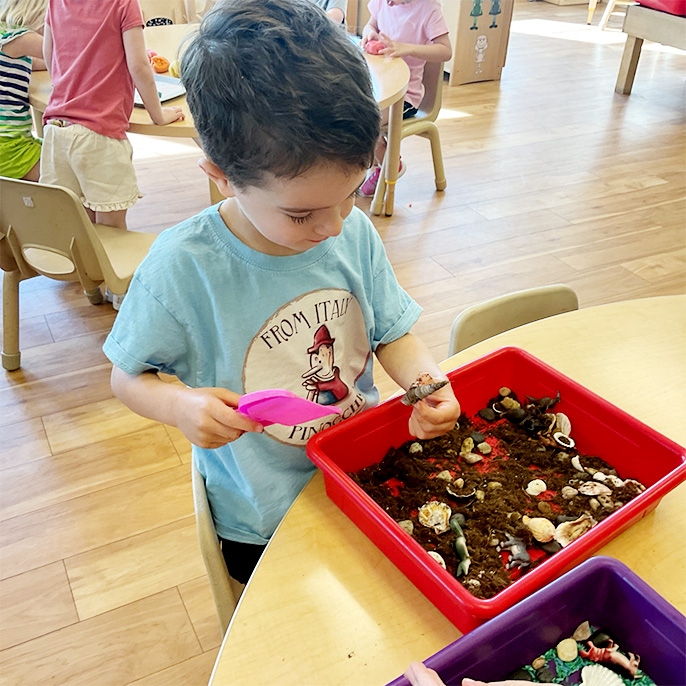
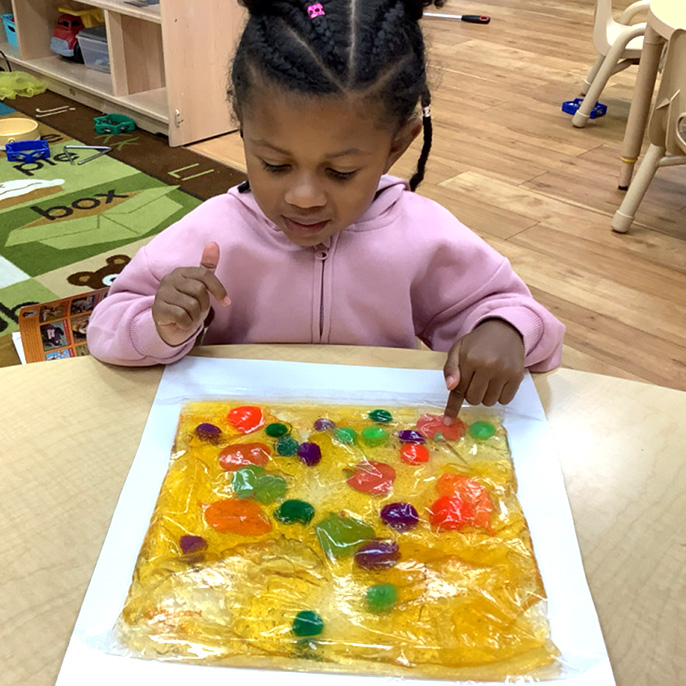
Fill shallow bins with materials such as strips of paper, felt, or craft foam, pom poms, feathers, balls, oobleck, playdough, cornmeal, snow and mud. Add cups, scoops, and funnels. Encourage descriptive language — “smooth”, “grainy”, “cold”, “warm.”
Sound & Movement Play
Make your own instruments by attaching bells to paper towel tubes or putting rocks or beans in containers for shaking, tapping, and listening. Pair with music and movement challenges.
Nature Observations
Attach seasonal leaves, pine needles, twigs and bark to the bottom of a bin or piece of cardboard and encourage children to touch and compare textures and practice
observation skills. These could also be observed from inside a clear, sealed container.
Small World Play
Combine sensory experiences with dramatic play by creating a “small world” in a bin. This involves children creating and acting out narratives in miniature, themed environments (like farms, oceans, or construction sites) using small figurines, natural materials, and tactile bases like water or playdough. It combines imaginative role-playing with sensory exploration, boosting creativity, motor skills, language development, and emotional regulation.
 Simple At-Home Sensory Ideas
Wondering how to get started at home? You don’t need expensive supplies to give your child rich sensory experiences — and you don’t have to dread the cleanup. Simple sensory play activities at home support the same brain development happening in early childhood classrooms.
Water Play
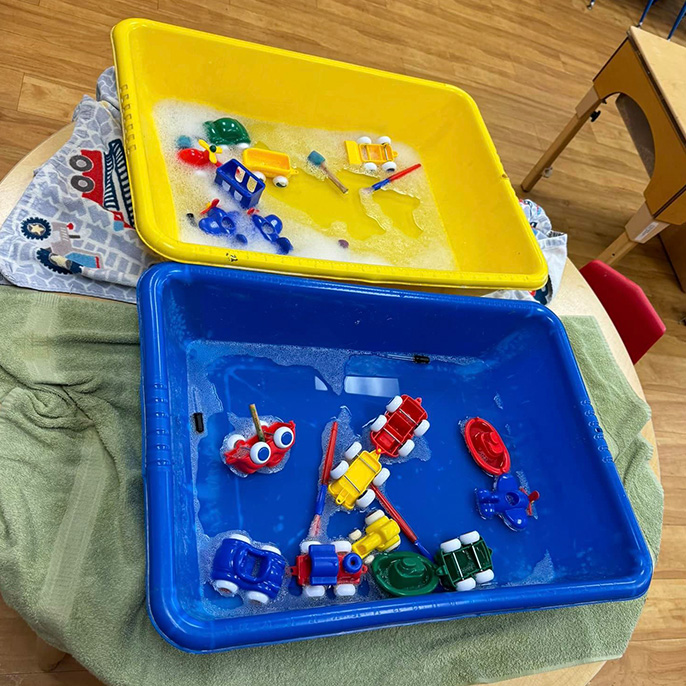
Fill a shallow tub with warm water and kitchen measuring cups. Add a few drops of safe soap for bubbles. Place towels on the floor to catch spills.
Small World Play on a Sled!
Fill a sled with snow and add toy animals along with tongs or scoops.
Ice Cube Excavation
Give children droppers with warm water to slowly melt the ice and free the toys.
Homemade Cloud Dough
Mix 8 cups flour + 1 cup oil — smooth, squeezable, and reusable. Store in a sealed container.
Nature Walks
Collect leaves, rocks, and flowers. Sort by size, color, and texture when you get home.
Play Is the Work of Childhood
Sensory play is essential work for growing brains. Children absorb information with their whole bodies through active sensory and motor engagement with the world, not just from listening or watching. Sensory play pays developmental dividends that last well beyond the preschool years.
Interested in seeing sensory play in action?
Book a tour and follow us on Facebook, Instagram, and TikTok!
References & Further Reading


