
Menu
 1.866.668.5111
  6:30 am - 6:00 pm
 Give a Happy High Five!

May 20, 2026
Batteries Not Required: Simple, Screen-Free Learning Tools That Build Big Skills
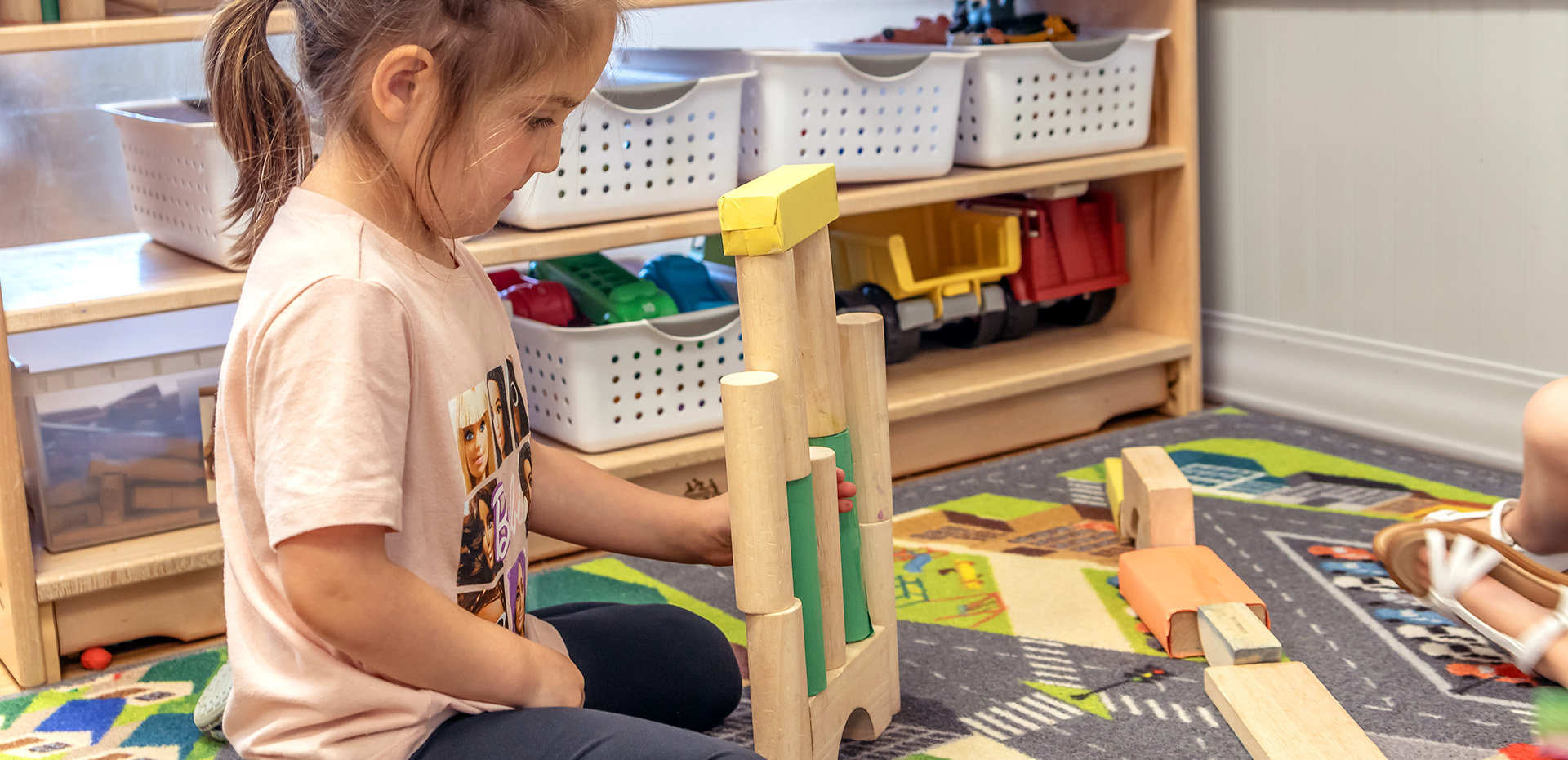
Jennifer Horner, Director of Education Development
The toy aisle can compel parents to feel like children “need” sound effects, flashing lights, and battery powered devices to learn. But the truth is, some of the richest learning experiences happen with the simplest materials.
At Doodle Bugs! Children’s Learning Academy, we get to witness children sink deeply into engaging meaningful play every day with open-ended materials that don’t sing, blink or need charging. These simple tools nurture the imagination, motivate experimentation and fuel discovery.
Keep reading to learn exactly what these tools are, why they’re the best ingredients for healthy learning, and how most are already a part of (or can be easily added to) home environments.
Why Simple Materials Matter
Open-ended materials are items that can be used in many different ways rather than having one specific purpose or outcome. Unlike toys that only “do” one thing, open-ended materials put children in the driver’s seat of their play instead of having the toys do the work for them.
While browsing the toy and craft aisles, ask yourself:
“How many different ways can (insert child’s name) play with this?”
Take a moment to really envision the specific child encountering the toy and take inventory of the potential skills that may be encouraged by it:
Language development – Does it promote expressive speaking and/or back and forth conversation?
Creativity and imagination – Does it invite children to wonder, “What else can I do with this?”
Fine motor skills – Are the hands encouraged to explore the item in lots of different ways? (hold, grasp, poke, pinch, squeeze, balance and maneuver)
Early science and sensory skills – Does it explore movement, gravity and texture?
Early math and literacy concepts – What is the potential for incorporating books, counting, patterns and symbols into the play with this material?
Social-emotional growth – Is there room for someone else to be invited into playing with this toy to build social skills and emotional regulation?
Problem-solving and critical thinking – How is this tool going to promote them to think beyond the surface of what the toy can be used for?
When children use their own ideas instead of following a toy’s programmed response, their brains are actively building connections. This type of open-ended exploration supports deeper learning because the child is driving the experience rather than passively responding to it.
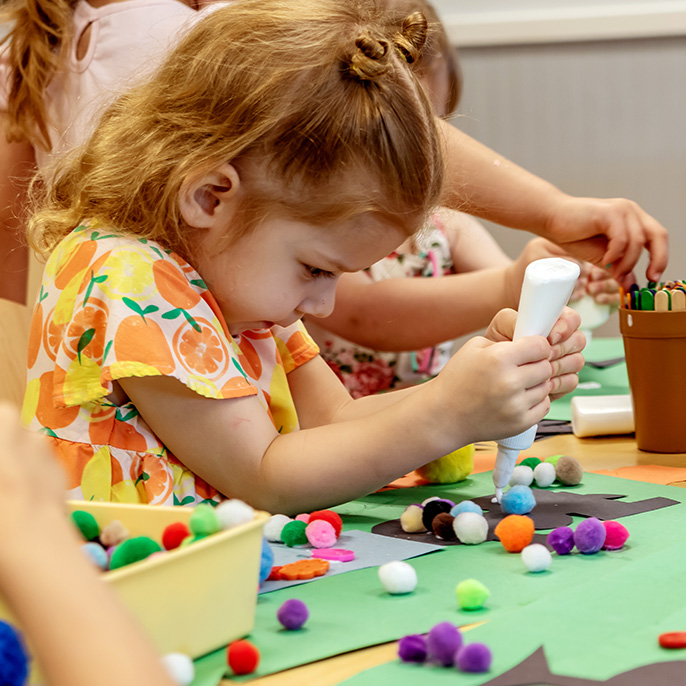 Creativity Without Instructions
Learning almost always happens IN the process and is not the result of the final product. A child rolling playdough snakes is strengthening hand muscles for future writing. A child sorting buttons by color is exploring early math concepts. A child crumpling tissue paper is building finger strength and coordination.
Art experiences should be focused on the child exploring the materials freely without confinement to a final product (like a coloring book page) or imposed step-by-step directions.
- Tools:
- Play-dough, pipe cleaners, tissue paper, construction paper, buttons, glue, paint, markers
- Developing Skills:
- Creativity, decision-making, fine motor strength, self-expression
Art materials allow children to better understand themselves as they explore their likes, dislikes and interests. Creative expression also provides a healthy outlet for children to release energy, process emotions, decompress, and communicate their thoughts and ideas in ways that go beyond words.
Curiosity Begins with Observation
Simple science tools can inspire incredible curiosity.
- Tools:
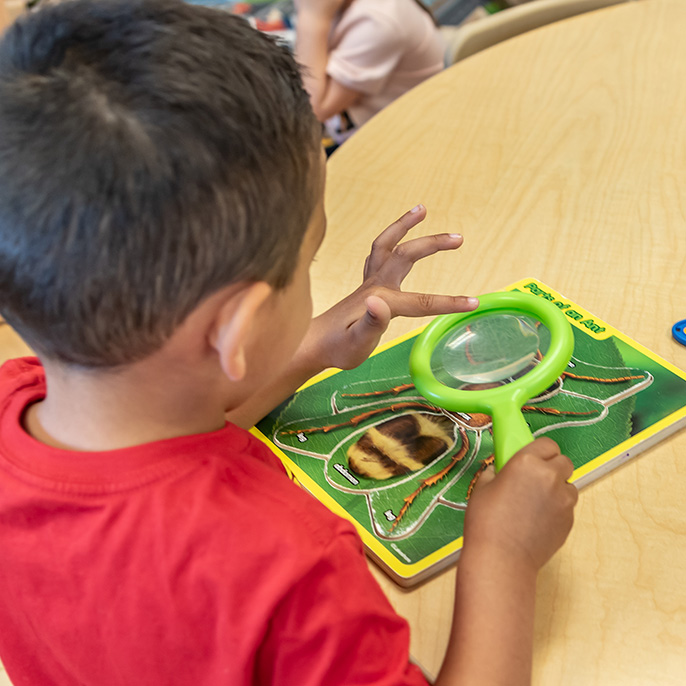
- Magnifying glasses; play tweezers (gator grabbers); nature items like twigs, leaves, plants, shells and rocks
- Developing Skills:
- Coordination and focus as they practice holding one item and using a magnifying glass to observe it
- Attention to detail
- Comparison and classification skills
- Wonderment and question asking
The outdoors is an incredible teacher! From the changing sky to the movement of the air and the intricate details found throughout nature, the natural world offers endless opportunities for discovery, wonder and learning.
Pretend Play Builds Real-Life Skills
When children pretend to cook dinner, care for animals or fix a faucet, they are developing a wide range of skills including communication, problem-solving, creativity, cooperation and real-world understanding.
- Tools:
- Kitchen sets, toy food, costumes, dolls, animals, pretend tool set
- Developing Skills:
- Communication, cooperation, emotional expression, sequencing, problem-solving, early literacy and storytelling
Pretend play also helps children process experiences from their everyday lives in safe and meaningful ways.
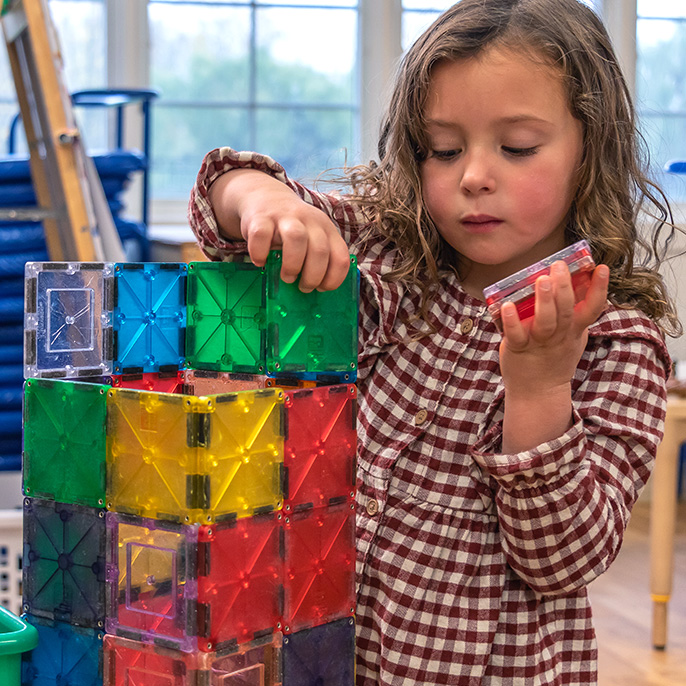 Big Thinking with Blocks and Magnetic Tiles
Blocks and MagnaTiles may look simple, but they offer endless opportunities for creative, imaginative thinking and problem-solving. A tower that falls becomes lessons in balance, foundation, and resilience. A bridge for toy animals is an adventure in trial and error, resourcefulness, and engineering. A pretend city invites storytelling, interactive play, and cooperation skills.
- Tools
- Soft blocks, wooden blocks, and magnetic tiles.
- Questions to Ask:
- “What do you think will happen if…?”
- “How could we make it stronger?”
- “Can you build a library with books for the toy people to visit?”
- Developing Skills:
- Balance and gravity, shapes and spatial awareness, counting and patterns, planning and persistence, cooperative play
Puzzles and Problem-Solving
Puzzles may seem quiet and simple, but they build important cognitive skills.
- Tools:
- Knob and peg puzzles, chunky puzzles, shape sorters, floor puzzles, match puzzles (upper and lowercase letters), photo and real image puzzles
- Developing Skills:
- Visual discrimination, persistence, hand-eye coordination, memory, spatial reasoning, confidence
Puzzles can also offer a lot of wonderful exposure to different types of careers, families and cultures depending on the subject or theme of the puzzle.
Literacy and Math Through Play
- Tools:
- Magnetic letters and numbers, small objectives of varying color and size to sort and count, letter cards.
- Activities
- Matching letters to names, sorting by color or shape, counting objects, making patterns, creating simple words like their name, number hunts around the room.
- Developing Skills:
- Young children learn best when they can touch and move materials while exploring concepts naturally as they play.
Magnetic letters and numbers are wonderful hands-on learning tools because children can move, sort, arrange, and manipulate them freely.
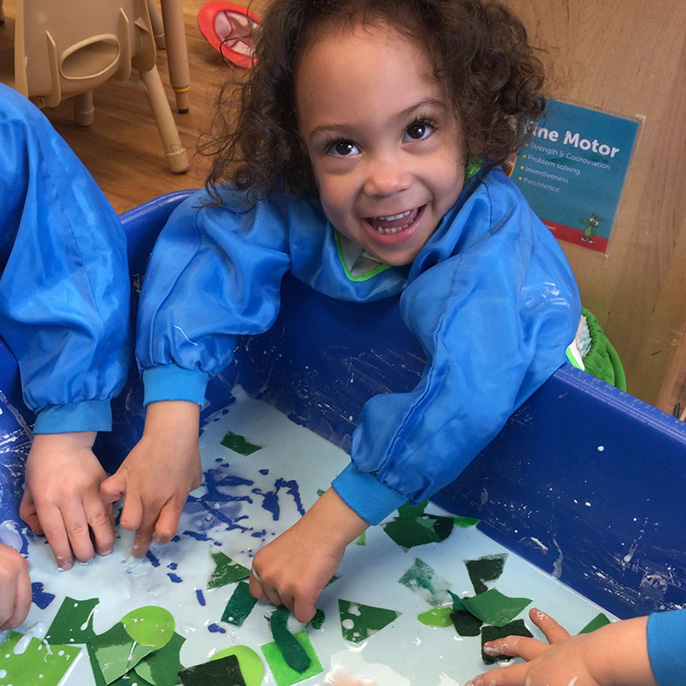 Sensory Bins: Learning Through Exploration
- Tools:
- Water with scoops and cups, leaves, pom-poms, cornmeal, slimy substances like oobleck (cornstarch and water), measuring cups, funnels, sifters, and water resistant toys (a mix of ones that sink and float).
- Adding toy animals, people or measuring tools can extend the learning even further
- Developing Skills:
- Children are learning far more than it appears. Sensory play supports: fine motor muscles and coordination, focus and attention, scientific concepts like how things pour, vocabulary, self-regulation
Some of the most engaging classroom moments happen around sensory bins filled with simple materials.
A bin of dry rice and toy dinosaurs can become a prehistoric excavation site. A water bin with cups and funnels becomes an introduction to volume and measurement. No batteries required.
The Magic Is in the Interactions
While the ability to play independently with a learning tool is an important skill, children thrive in social environments where conversation, collaboration and shared experiences deepen learning and strengthen relationships. Every child differs in how they prefer to interact, but the suggestions below are great ways to support their exploration while building strong, trusting connections with them.
If a child is playing alone, sit nearby and simply observe. Resist the urge to interrupt or direct the play unless they invite you in. Your quiet presence communicates that you value what they are doing and respect their space, ideas and process. If they do welcome you into their play, be fully present and follow their lead.
Narrating some of their actions and decisions is another powerful way to show interest and encourage language development. Simple observations such as, “You chose the green crayon,” or “The marks you’re making are so interesting. They remind me of _____,” help children feel seen while expanding their vocabulary and awareness of their own thinking.
Thoughtful questions can also encourage expressive language and deeper problem-solving. Asking things like, “What made you decide to connect those two blocks?” invites children to reflect on their choices and communicate their ideas step-by-step.
In group settings, listen first. Observe how the children are communicating and working together. Do they need support learning how to ask for a tool, join a game or wait for a turn? Careful listening gives adults the information they need to model social skills, guide interactions and support meaningful learning in the moment.
 Simple Really Is Enough
Simple materials create space for connection, conversation, and imagination. And those are the experiences children remember most.
Children do not need constant entertainment, expensive gadgets, or battery-powered toys to learn well. A set of blocks, some pretend play materials, a basket of magnetic letters and numbers, a sensory bin, a handful of craft supplies, and a caring adult nearby is enough.
Those simple experiences are often the ones doing the deepest developmental work. At Doodle Bugs!, we believe meaningful learning happens through play, exploration, creativity, and relationships — and none of that requires batteries.


